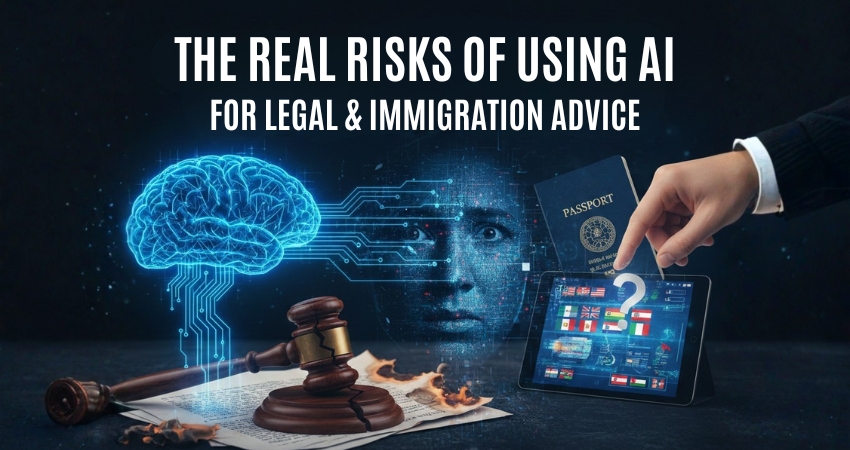
The Real Risks of Using AI for Legal & Immigration Advice | Cosmos Immigration

Risks of AI

Why You Shouldn’t Rely on ChatGPT for Visa Applications

In today’s digital world, it’s tempting to rely on AI for everything — even immigration decisions. Many applicants now search for AI for legal and immigration advice hoping to get quick answers about permanent residency, work permits, or study visas.

The information sounds confident. It feels convenient. And it’s free.

But immigration is not a Google search. It’s a legal process that can shape your career, finances, and family’s future.

Instead of depending solely on automated responses, starting with a structured eligibility assessment  conducted by a licensed professional can prevent costly mistakes before they happen.

At Cosmos Immigration, we regularly meet applicants who relied on AI-generated advice — only to face refusals, delays, or complications that could have been avoided with proper guidance.

Before you trust AI with something as important as your visa, here’s what you need to know.


What Is AI for Legal and Immigration Advice?

AI for legal and immigration advice refers to tools like ChatGPT or automated platforms that provide general guidance about visa categories, eligibility requirements, or documentation — without professional licensing or legal accountability.

These systems can explain terminology and outline general processes. But they are not part of a licensed immigration and education consulting firm, nor are they regulated professionals authorized to assess your case or represent you before immigration authorities.

That distinction matters more than most people realize.


1. Immigration Law Requires Professional Judgment — Not Automation

Immigration advice isn’t simply about choosing a visa category. It requires:

  • Careful eligibility assessment
  • Strategic pathway planning
  • Detailed document verification
  • Risk analysis
  • Legal interpretation of policy

AI does not have case-handling experience. It cannot detect subtle red flags in your travel history. It cannot interpret complex documentation issues. It cannot evaluate how one minor detail may affect your approval chances.

And most importantly — it carries no accountability.

When something goes wrong, there is no responsibility attached to automated advice.


2. Immigration Rules Change Constantly

Immigration systems evolve frequently.

Policies in countries such as Canada ,Australia, and the United Kingdom are regularly updated — from points thresholds and occupation lists to documentation rules and processing procedures.

AI systems rely on previously trained information and may not reflect real-time policy changes.

Submitting an application based on outdated or generalized advice can result in:

  • Visa refusal
  • Processing delays
  • Financial loss
  • Long-term immigration complications

Accurate, up-to-date guidance is not optional. It is essential.


3. There Is No Accountability with AI Advice

If an AI tool gives incorrect advice, who is responsible?

No one.

There is:

  • No regulatory oversight
  • No complaint mechanism
  • No professional liability
  • No legal representation

In contrast, working with a regulated immigration consultant means your case is assessed within a professional framework, supported by documented processes and clear accountability standards.

Immigration authorities will not accept “AI suggested it” as a defense if your application contains errors. The responsibility always falls on you.


4. ChatGPT Immigration Advice Risks: Personal Situations Are Never Simple

Every immigration profile is unique.

You may have:

  • Previous refusals
  • Gaps in employment
  • Complex travel history
  • Sponsorship obligations
  • Financial documentation concerns
  • Country-specific restrictions

AI provides generalized answers. It cannot ask follow-up questions that uncover hidden risk factors. It cannot identify inconsistencies between documents. It cannot build a strategy tailored to your long-term immigration goals.

What looks straightforward on the surface often contains legal nuances beneath it.


5. Drafting Visa Documents with AI Can Backfire

Many applicants now use AI to draft:

  • Statements of Purpose
  • Invitation letters
  • Employment reference letters
  • Cover letters
  • Explanation letters

On the surface, these documents appear polished. But immigration officers assess credibility, consistency, and legal compliance — not just grammar.

Even small inconsistencies in applications such as a Schengen visa submission can raise red flags and result in refusal.

We have seen cases where AI-generated employment letters did not perfectly align with supporting salary documentation. That inconsistency alone was enough to trigger rejection.

Correcting a refusal is often far more expensive and stressful than submitting a strong application the first time.


6. Overconfidence Can Lead to Costly Visa Mistakes

One of the biggest risks of AI for visa applications is false confidence.

Automated responses often sound definitive — even when they are incomplete.

This can lead to:

  • Incorrect points calculations
  • Misunderstanding eligibility criteria
  • Choosing the wrong visa category
  • Overestimating approval chances

This is especially risky in competitive systems such as Canada’s Express Entry and PNP skilled migration pathways , where even small scoring miscalculations can remove you from consideration.

In immigration, minor inaccuracies can result in:

  • Application rejection
  • Entry bans
  • Allegations of misrepresentation
  • Long-term credibility damage

Hope is not a strategy. Proper evaluation is.


When Can AI Be Useful?

AI tools can be helpful for:

  • Understanding immigration terminology
  • Conducting initial research
  • Learning about general visa categories
  • Preparing questions before speaking to a consultant

But AI should support your understanding — not replace professional immigration advice.

Many applicants only realize the value of expert support after encountering avoidable setbacks, which is why understanding the benefits of hiring an immigration lawyer  can make a significant difference before problems arise.


Why Professional Immigration Guidance Still Matters

At Cosmos Immigration, we provide:

✔ Personalized eligibility assessments
✔ Strategic visa pathway planning
✔ Accurate documentation guidance
✔ Risk identification and mitigation
✔ Up-to-date immigration policy knowledge
✔ End-to-end application management

Immigration is not just paperwork. It is a life decision.

A refusal does not just mean reapplying. It can mean months of delay, lost opportunities, emotional stress, and financial strain.

Most applicants get one strong opportunity to present their case correctly. That opportunity should not depend on automated assumptions.


Final Thoughts: Should You Rely on AI for Legal and Immigration Advice?

AI is a powerful research tool. But it is not a regulated immigration consultant.

When your visa approval, residency status, financial investment, and family’s future are involved, relying solely on AI for legal and immigration advice is a risk you cannot afford.

If you are considering applying for permanent residency, a work visa, a study permit, or a visit visa, speak with a qualified professional and book a consultation with Cosmos Immigration before submitting any application.

The right guidance today can protect your future tomorrow.

Related posts

Leave a Comment